Peter Paul Rubens
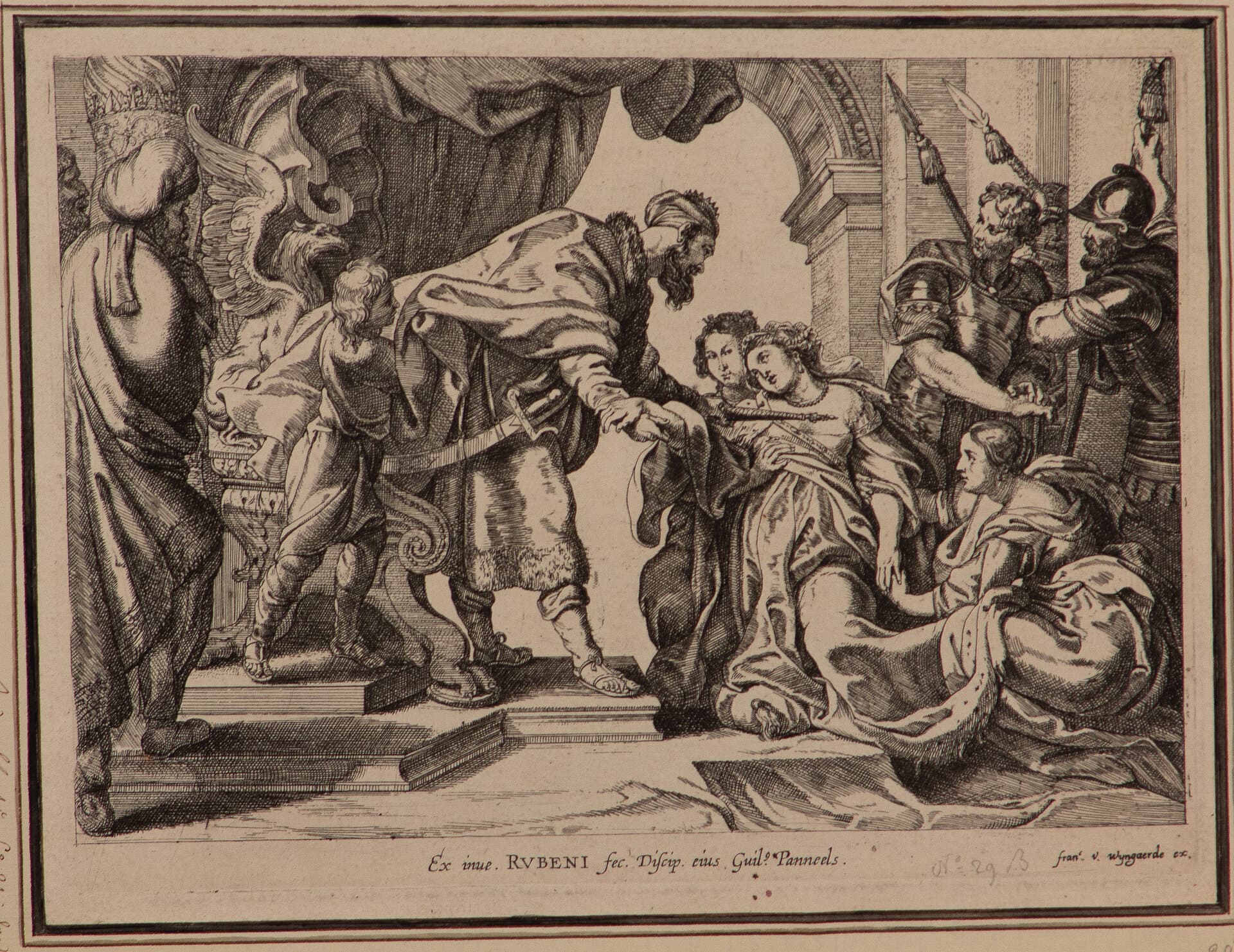
Esther before Ahasuerus
Creation
around 1610 - 1632
Dimensions
17.7 x 24.5 cm
Material / Technique
paper/etching
Rubens prints
prints, photographs
Artist
Peter Paul Rubens (1577 - 1640)
Engraver
Guillaume Panneels (1600 - 1632)
About the object
Ancient writers regarded the Persian king Ahasuerus (Artaxerxes or Xerxes I) as an archetypal despot because of his military campaign against the Greek city states. Rubens, however, focuses on the king’s capacity for mercy as portrayed in the biblical story of Esther:
Esther, whom Ahasuerus had recently taken as his wife, beseeched him to revoke a decree that threatened the empire’s Jewish population. In doing so, Esther risked her own death. Yet the king granted her request: this is symbolized by the sceptre he points at her.